http://www.buffalo.edu/news/10364
Release Date: August 21, 2009
BUFFALO, N.Y. -- In a study published in the most recent issue of the journal Sociological Inquiry, sociologists from four major research institutions focus on one of the most curious aspects of the 2004 presidential election: the strength and resilience of the belief among many Americans that Saddam Hussein was linked to the terrorist attacks of 9/11.
Although this belief influenced the 2004 election, they claim it did not result from pro-Bush propaganda, but from an urgent need by many Americans to seek justification for a war already in progress.
The findings may illuminate reasons why some people form false beliefs about the pros and cons of health-care reform or regarding President Obama's citizenship, for example.
The study, "There Must Be a Reason: Osama, Saddam and Inferred Justification" calls such unsubstantiated beliefs "a serious challenge to democratic theory and practice" and considers how and why it was maintained by so many voters for so long in the absence of supporting evidence.
Co-author Steven Hoffman, Ph.D., visiting assistant professor of sociology at the University at Buffalo, says, "Our data shows substantial support for a cognitive theory known as 'motivated reasoning,' which suggests that rather than search rationally for information that either confirms or disconfirms a particular belief, people actually seek out information that confirms what they already believe.
"In fact," he says, "for the most part people completely ignore contrary information.
"The study demonstrates voters' ability to develop elaborate rationalizations based on faulty information," he explains.
While numerous scholars have blamed a campaign of false information and innuendo from the Bush administration, this study argues that the primary cause of misperception in the 9/11-Saddam Hussein case was not the presence or absence of accurate data but a respondent's desire to believe in particular kinds of information.
"The argument here is that people get deeply attached to their beliefs," Hoffman says.
"We form emotional attachments that get wrapped up in our personal identity and sense of morality, irrespective of the facts of the matter. The problem is that this notion of 'motivated reasoning' has only been supported with experimental results in artificial settings. We decided it was time to see if it held up when you talk to actual voters in their homes, workplaces, restaurants, offices and other deliberative settings."
-----
The study addresses what it refers to as a "serious challenge to democratic theory and practice that results when citizens with incorrect information cannot form appropriate preferences or evaluate the preferences of others."
One of the most curious "false beliefs" of the 2004 presidential election, they say, was a strong and resilient belief among many Americans that Saddam Hussein was linked to the terrorist attacks of Sept. 11, 2001.
Hoffman says that over the course of the 2004 presidential campaign, several polls showed that majorities of respondents believed that Saddam Hussein was either partly or largely responsible for the 9/11 attacks, a percentage that declined very slowly, dipping below 50 percent only in late 2003.
"This misperception that Hussein was responsible for the Twin Tower terrorist attacks was very persistent, despite all the evidence suggesting that no link existed," Hoffman says.
The study team employed a technique called "challenge interviews" on a sample of voters who reported believing in a link between Saddam and 9/11. The researchers presented the available evidence of the link, along with the evidence that there was no link, and then pushed respondents to justify their opinion on the matter. For all but one respondent, the overwhelming evidence that there was no link left no impact on their arguments in support of the link.
One unexpected pattern that emerged from the different justifications that subjects offered for continuing to believe in the validity of the link was that it helped citizens make sense of the Bush Administration's decision to go to war against Iraq.
"We refer to this as 'inferred justification,'" says Hoffman "because for these voters, the sheer fact that we were engaged in war led to a post-hoc search for a justification for that war.
"People were basically making up justifications for the fact that we were at war," he says.
"One of the things that is really interesting about this, from both the perspective of voting patterns but also for democratic theory more generally, Hoffman says, "is that we did not find that people were being duped by a campaign of innuendo so much as they were actively constructing links and justifications that did not exist.
"They wanted to believe in the link," he says, "because it helped them make sense of a current reality. So voters' ability to develop elaborate rationalizations based on faulty information, whether we think that is good or bad for democratic practice, does at least demonstrate an impressive form of creativity."
Friday, August 21, 2009


Research shows why low vitamin D raises heart disease risks in diabetics
http://mednews.wustl.edu/news/page/normal/14489.html
By Jim Dryden
Aug. 21, 2009 -- Low levels of vitamin D are known to nearly double the risk of cardiovascular disease in patients with diabetes, and researchers at Washington University School of Medicine in St. Louis now think they know why.
They have found that diabetics deficient in vitamin D can't process cholesterol normally, so it builds up in their blood vessels, increasing the risk of heart attack and stroke. The new research has identified a mechanism linking low vitamin D levels to heart disease risk and may lead to ways to fix the problem, simply by increasing levels of vitamin D.
"Vitamin D inhibits the uptake of cholesterol by cells called macrophages," says principal investigator Carlos Bernal-Mizrachi, M.D., a Washington University endocrinologist at Barnes-Jewish Hospital. "When people are deficient in vitamin D, the macrophage cells eat more cholesterol, and they can't get rid of it. The macrophages get clogged with cholesterol and become what scientists call foam cells, which are one of the earliest markers of atherosclerosis."
Macrophages are dispatched by the immune system in response to inflammation and often are activated by diseases such as diabetes. Bernal-Mizrachi and his colleagues believe that in diabetic patients with inadequate vitamin D, macrophages become loaded with cholesterol and eventually stiffen blood vessels and block blood flow.
Thai elephant hurt by mine gets artificial leg
http://www.msnbc.msn.com/id/32426917
updated 2:25 p.m. ET, Sat., Aug 15, 2009
LAMPANG, Thailand - Motola, a female elephant who stepped on a land mine 10 years ago and endured painful operations, was fitted Saturday in Thailand for a permanent artificial leg.
The 48-year-old pachyderm became a symbol of the plight of today's elephants, and her injury sparked international sympathy and donations.
Experts were making a cast of her injured left front leg for a plastic prosthetic limb which will be attached later Saturday.
"I do hope she will accept the new leg. It would be wonderful to see Motola and Baby Mosha walking together side-by-side," said Soraida Salwala, secretary general of the Friends of the Asian Elephant, a non-governmental group.
Mosha, also a land mine victim, became the world's first elephant with an artificial leg, attached in 2007. Soraida said Mosha, now a 3-year-old, is faring well and has outgrown three of her prosthetic devices.
Both elephants have been cared for at the Elephant Hospital, set up by Soraida's group in 1993. The world's first such facility, the hospital has treated thousands of elephants for ailments ranging from eye infection to gunshot wounds.
Motola was injured in 1999 while working at a logging camp along the Myanmar-Thailand border, a region peppered with land mines after half a century of insurgency. Her mangled foot was amputated, and she hobbled on three feet until fitted with a temporary, canvas shoe-like device two years later.
Motola's initial operation used enough anesthetic to floor 70 people — a record noted in the 2000 Guinness Book of World Records.
"It has been 10 years now, but in all these long years Motola enjoyed a happy life, walking out of her shelter for a sun bath," Soraida said.
Soraida said Motola has otherwise been in fine health, with her once bony frame now weighing more than 3 tons.
The artificial leg has been constructed by the Prostheses Foundation, which also makes cheap but effective artificial limbs for human amputees.
A number of elephants have had land mine injuries. But that is only one of many problems facing the domesticated giant, whose numbers have dropped from 13,400 in 1950 to today's estimated 2,500. The number of wild elephants has also dropped dramatically.
Traditionally the truck, taxi and logging worker of Thailand, the elephant has lost most of its jobs to modernization. One saving grace has been the tourism industry, which employs large numbers for elephant trekking and other activities.
Ridge says he was pressured to raise terror alert
http://www.msnbc.msn.com/id/32501273/ns/us_news-security/
updated 9:55 p.m. ET, Thurs., Aug 20, 2009
WASHINGTON - Former Homeland Security Secretary Tom Ridge claims in a new book that he was pressured by other members of President George W. Bush's Cabinet to raise the nation's terror alert level just before the 2004 presidential election.
Ridge says he objected to raising the security level despite the urgings of former Defense Secretary Donald H. Rumsfeld and then-Attorney General John Ashcroft, according to a publicity release from Ridge's publisher. He said the episode convinced him to follow through with his plans to leave the administration; he resigned on Nov. 30, 2004.
Texas schoolbooks: Newt Gingrich but no liberals
I hope to leave Georgia for a less medieval state someday. I already knew Texas was not a place I would like to live.
http://thinkprogress.org/2009/08/21/texas-history-gingrich/
links to the following
http://www.chron.com/disp/story.mpl/metropolitan/6581189.html
By GARY SCHARRER
AUSTIN BUREAU
Aug. 20, 2009, 11:19PM
AUSTIN — Texas high school students would learn about such significant individuals and milestones of conservative politics as Newt Gingrich and the rise of the Moral Majority — but nothing about liberals — under the first draft of new standards for public school history textbooks.
And the side that got left out is very unhappy.
As it stands, students would get “one-sided, right wing ideology,” said Rep. Trey Martinez Fischer, D-San Antonio, chairman of the House Mexican American Caucus.
“We ought to be focusing on historical significance and historical figures. It's important that whatever course they take, that it portray a complete view of our history and not a jaded view to suit one's partisan agenda or one's partisan philosophy,” he said.
The State Board of Education has appointed “review committees” made up largely of active and retired school teachers to draft new social studies curriculum standards as well as six “expert reviewers” to help shape the final document.
The standards, which the board will decide next spring, will influence new history, civics and geography textbooks.
The first draft for proposed standards in United States History Studies Since Reconstruction says students should be expected “to identify significant conservative advocacy organizations and individuals, such as Newt Gingrich, Phyllis Schlafly and the Moral Majority.”
Gingrich helped lead House Republicans to their 1994 takeover of Congress and became House speaker. Schlafly founded the conservative Eagle Forum and became a leading opponent of the Equal Rights Amendment aimed at formalizing women's equality with men. The Moral Majority formed in the late 1970s as an evangelical Christian organization that influenced politics and public policy for decades.
Will it pass muster?
Whether students will also be exposed to liberal examples from the ebb and flow of American politics is hard to predict. Conservatives form the largest bloc on the 15-member State Board of Education, whose partisan makeup is 10 Republicans and five Democrats.
David Bradley, R-Beaumont, one of the conservative leaders, figures the current draft will pass a preliminary vote along party lines “once the napalm and smoke clear the room.”
But not all conservative board members share that view.
“It is hard to believe that a majority of the writing team would approve of such wording,” said Terri Leo, R-Spring. “It's not even a representative selection of the conservative movement, and it is inappropriate.”
Advocate for both sides
Another board conservative, Ken Mercer, R-San Antonio, thinks students should study both sides to “see what the differences are and be able to define those differences.”
He would add James Dobson's Focus on the Family, conservative talk show host Sean Hannity and former Arkansas Gov. Mike Huckabee to the list of conservatives. Others have proposed adding talk show host Rush Limbaugh and the National Rifle Association.
“I think, at the end of the day, we will want the young students to be able to identify what's conservative, what's their advocacy and who are the conservative groups, individuals and leaders. And what is liberal in contrast,” Mercer said.
Among liberals to include, Mercer would nominate the National Education Association, MoveOn.org, Planned Parenthood and the Texas Freedom Network — a group that says it promotes “religious freedom and individual liberties to counter the radical right.”
“We don't think it's appropriate to be listing groups and people in the standards just because they're conservatives or liberals,” said Kathy Miller, the group's president. “The state board should simply stop putting politics ahead of our kids' education and putting teachers in the position of indoctrinating students with political agendas.”
The debate will likely intensify in coming months. Two reviewers have recommended that César Chávez, the late farm workers union leader, be removed from history books because they deem him an unworthy role model.
Board members appoint the review committees and typically choose people who share their philosophies.
gscharrer@express-news.net
Thursday, August 20, 2009
Poverty Is Poison
There is an interesting and informative comment to this post.
http://www.nytimes.com/2008/02/18/opinion/18krugman.html
By PAUL KRUGMAN
Published: February 18, 2008
“Poverty in early childhood poisons the brain.” That was the opening of an article in Saturday’s Financial Times, summarizing research presented last week at the American Association for the Advancement of Science.
As the article explained, neuroscientists have found that “many children growing up in very poor families with low social status experience unhealthy levels of stress hormones, which impair their neural development.” The effect is to impair language development and memory — and hence the ability to escape poverty — for the rest of the child’s life.
So now we have another, even more compelling reason to be ashamed about America’s record of failing to fight poverty.
L. B. J. declared his “War on Poverty” 44 years ago. Contrary to cynical legend, there actually was a large reduction in poverty over the next few years, especially among children, who saw their poverty rate fall from 23 percent in 1963 to 14 percent in 1969.
But progress stalled thereafter: American politics shifted to the right, attention shifted from the suffering of the poor to the alleged abuses of welfare queens driving Cadillacs, and the fight against poverty was largely abandoned.
In 2006, 17.4 percent of children in America lived below the poverty line, substantially more than in 1969. And even this measure probably understates the true depth of many children’s misery.
-----
According to one recent estimate, American children born to parents in the bottom fourth of the income distribution have almost a 50 percent chance of staying there — and almost a two-thirds chance of remaining stuck if they’re black.
That’s not surprising. Growing up in poverty puts you at a disadvantage at every step.
I’d bracket those new studies on brain development in early childhood with a study from the National Center for Education Statistics, which tracked a group of students who were in eighth grade in 1988. The study found, roughly speaking, that in modern America parental status trumps ability: students who did very well on a standardized test but came from low-status families were slightly less likely to get through college than students who tested poorly but had well-off parents.
http://www.ft.com/cms/s/62c45126-dc1f-11dc-bc82-0000779fd2ac,dwp_uuid=df217c24-3011-11da-ba9f-00000e2511c8,print=yes.html
Poverty mars formation of infant brains
By Clive Cookson in Boston
Published: February 16 2008 01:39 | Last updated: February 16 2008 01:39
Poverty in early childhood poisons the brain, the American Association for the Advancement of Science meeting in Boston heard on Friday.
Neuroscientists said many children growing up in very poor families with low social status experience unhealthy levels of stress hormones, which impair their neural development. That effect is on top of any damage caused by inadequate nutrition and exposure to environmental toxins.
Studies by several US universities have revealed the pervasive harm done to the brain, particularly between the ages of six months and three years, from low socio-economic status.
Martha Farah, director of the University of Pennsylvania’s centre for cognitive neuroscience, said: “The biggest effects are on language and memory. The finding about memory impairment – the ability to encounter a pattern and remember it – really surprised us.”
Jack Shonkoff, director of Harvard University’s centre on the developing child, said policymakers had to take note of the research because “the foundation of all social problems later in life takes place in the early years”.
“The earlier you intervene [to counteract the impact of poverty], the better the outcome in the end, because the brain loses its plasticity [adaptability] as the child becomes older,” he said.
Stress hormone levels tend to be higher in young children from poor families than in children growing up in middle-class and wealthy families, said Prof Shonkoff. Excessive levels of these hormones disrupt the formation of synaptic connections between cells in the developing brain – and even affect its blood supply. “They literally disrupt the brain architecture,” he said.
The findings explain why relatively unfocused programmes to prepare poor children for school, such as Head Start in the US, have produced only modest results, the scientists said.
More focused interventions could give more substantial benefits, said Courtney Stevens of the University of Oregon. She gave the preliminary results of an eight-week programme aimed at poor parents of pre-school children in Oregon.
Parents attended weekly coaching sessions to improve their family communications skills and show them how to control their children’s bad behaviour. At the end of the programme, participating parents reported big reductions in family stress compared with a control group that did not take part. Brain scans of the children suggested neural improvements, too.
“Our findings are important because they suggest that kids who are at high risk for school failure can be helped through these interventions,” said Dr Stevens. “Even with these small numbers of children, the parent training appears very promising.”
Well-tailored programmes can help, Prof Shonkoff agreed. But in the end, the only way to remove the “toxic” impact of poverty on young brains is to abolish poverty itself, he said.
http://www.nytimes.com/2008/02/18/opinion/18krugman.html
By PAUL KRUGMAN
Published: February 18, 2008
“Poverty in early childhood poisons the brain.” That was the opening of an article in Saturday’s Financial Times, summarizing research presented last week at the American Association for the Advancement of Science.
As the article explained, neuroscientists have found that “many children growing up in very poor families with low social status experience unhealthy levels of stress hormones, which impair their neural development.” The effect is to impair language development and memory — and hence the ability to escape poverty — for the rest of the child’s life.
So now we have another, even more compelling reason to be ashamed about America’s record of failing to fight poverty.
L. B. J. declared his “War on Poverty” 44 years ago. Contrary to cynical legend, there actually was a large reduction in poverty over the next few years, especially among children, who saw their poverty rate fall from 23 percent in 1963 to 14 percent in 1969.
But progress stalled thereafter: American politics shifted to the right, attention shifted from the suffering of the poor to the alleged abuses of welfare queens driving Cadillacs, and the fight against poverty was largely abandoned.
In 2006, 17.4 percent of children in America lived below the poverty line, substantially more than in 1969. And even this measure probably understates the true depth of many children’s misery.
-----
According to one recent estimate, American children born to parents in the bottom fourth of the income distribution have almost a 50 percent chance of staying there — and almost a two-thirds chance of remaining stuck if they’re black.
That’s not surprising. Growing up in poverty puts you at a disadvantage at every step.
I’d bracket those new studies on brain development in early childhood with a study from the National Center for Education Statistics, which tracked a group of students who were in eighth grade in 1988. The study found, roughly speaking, that in modern America parental status trumps ability: students who did very well on a standardized test but came from low-status families were slightly less likely to get through college than students who tested poorly but had well-off parents.
refereced article
http://www.ft.com/cms/s/62c45126-dc1f-11dc-bc82-0000779fd2ac,dwp_uuid=df217c24-3011-11da-ba9f-00000e2511c8,print=yes.html
Poverty mars formation of infant brains
By Clive Cookson in Boston
Published: February 16 2008 01:39 | Last updated: February 16 2008 01:39
Poverty in early childhood poisons the brain, the American Association for the Advancement of Science meeting in Boston heard on Friday.
Neuroscientists said many children growing up in very poor families with low social status experience unhealthy levels of stress hormones, which impair their neural development. That effect is on top of any damage caused by inadequate nutrition and exposure to environmental toxins.
Studies by several US universities have revealed the pervasive harm done to the brain, particularly between the ages of six months and three years, from low socio-economic status.
Martha Farah, director of the University of Pennsylvania’s centre for cognitive neuroscience, said: “The biggest effects are on language and memory. The finding about memory impairment – the ability to encounter a pattern and remember it – really surprised us.”
Jack Shonkoff, director of Harvard University’s centre on the developing child, said policymakers had to take note of the research because “the foundation of all social problems later in life takes place in the early years”.
“The earlier you intervene [to counteract the impact of poverty], the better the outcome in the end, because the brain loses its plasticity [adaptability] as the child becomes older,” he said.
Stress hormone levels tend to be higher in young children from poor families than in children growing up in middle-class and wealthy families, said Prof Shonkoff. Excessive levels of these hormones disrupt the formation of synaptic connections between cells in the developing brain – and even affect its blood supply. “They literally disrupt the brain architecture,” he said.
The findings explain why relatively unfocused programmes to prepare poor children for school, such as Head Start in the US, have produced only modest results, the scientists said.
More focused interventions could give more substantial benefits, said Courtney Stevens of the University of Oregon. She gave the preliminary results of an eight-week programme aimed at poor parents of pre-school children in Oregon.
Parents attended weekly coaching sessions to improve their family communications skills and show them how to control their children’s bad behaviour. At the end of the programme, participating parents reported big reductions in family stress compared with a control group that did not take part. Brain scans of the children suggested neural improvements, too.
“Our findings are important because they suggest that kids who are at high risk for school failure can be helped through these interventions,” said Dr Stevens. “Even with these small numbers of children, the parent training appears very promising.”
Well-tailored programmes can help, Prof Shonkoff agreed. But in the end, the only way to remove the “toxic” impact of poverty on young brains is to abolish poverty itself, he said.
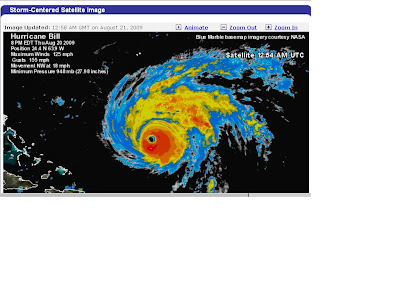
Hurricane Bill
To show enough land to see the size of Bill, I had to take a screen shot, copied it to Word and trimmed the parts of the screen outside the picture, copied that to Paint, then saved it as a bmp file, which I was able to upload here. Looks like there is some border from paint that I would like to get rid of if it were important enough to spend more time on.
http://www.wunderground.com/tropical/tracking/at200903_sat.html#a_topad
http://www.wunderground.com/tropical/tracking/at200903_sat.html#a_topad

Hurrican Bill
http://www.wunderground.com/tropical/tracking/at200903_sat.html#a_topad
The web site shows the size of Bill better. When I saved the picture and then uploaded it here, the edges got cut off.

The web site shows the size of Bill better. When I saved the picture and then uploaded it here, the edges got cut off.

Rise of the Bugs
http://www.newsweek.com/id/202865?from=rss
By Lily Huang | NEWSWEEK
Published Jun 20, 2009
From the magazine issue dated Jun 29, 2009
The most important question not raised during the swine-flu panic could have been asked by a 6-year-old: where do viruses come from? The answer, it turns out, is simple, and scary: viruses come from a giant wellspring of diseases—also known as the environment—that grown-ups should be very careful not to disturb. Pathogens—viruses, bacteria and a wide variety of other parasites—appear in nature as unpredictable, minimalist terrors equipped with little genetic material of their own but the ability to make things up as they go. A bird-flu virus can rest coolly in pigs, then flare up in humans, scrambling genes from all three species in ways impossible to fully anticipate with vaccines. The SARS virus bided its time among palm civets (a kind of mongoose) and horseshoe bats before killing humans in 2002. And possibly the most diminutive of all, the retrovirus HIV emerged from the blood of wild monkeys to become the most efficient destroyer of the human immune system. With strong enough poison and infinitely transmutable genes, a single pathogen could lay deadly siege to the rest of the living world.
The reason this has yet to happen in our lifetimes is that, brilliant as nature is at devising ways to kill, it has also come up with countless ways to cope and survive. Put all the living species together and you have an impressive array of mechanisms to fend off pathogens or contain them in particular ecosystems that have defenses built in. This arrangement, however, is now under serious threat: humans, moving ever deeper into the wild to level forests, extract minerals and plant crops, are changing the balance of ecosystems the world over and taking these defenses apart. These warped ecologies become ground zero for new and deadly infectious diseases, which emerge and spread at an ever-greater rate. This amounts to "Armageddon in slow motion," says Eric Chivian, head of the Center for Health and the Global Environment at Harvard Medical School. Chivian, who shared the Nobel Peace Prize in 1985 for alerting the public to the dangers of nuclear proliferation, now says the danger to human health posed by a degraded planet is "no less devastating than a nuclear war … the ultimate impact might be just as catastrophic."
The evidence is already in. Malaria, currently the most prevalent cause of death in the world, can be ascribed almost entirely to human acts of deforestation, which produces stagnant pools of water and allows more sunlight to reach water surfaces. This intensifies the growth of algae and forms the perfect nursery for Anopheles mosquitoes, potent vectors for the malaria parasite. Anopheles barely had a foothold in the ecosystem in its former state, but when conditions changed—as in the Amazon, East Africa and Southeast Asia—vector mosquitoes quickly displaced other benign species. The spread of other diseases has followed a similar trajectory.
Some snails, for instance, harbor parasitic worms called schistosomes, which infect the human bladder or intestines. In the Senegal River basin, populations of vector snails exploded upon construction of the Diama Dam in 1985, which made the water less saline. The region became a hotbed for schistosomiasis where it didn't exist before; currently, more than 200 million people are victims. Among flies, too, malignant species are winning out: as a result of deforestation, sand flies have surged into human populations in South America and South Asia, infecting millions each year with leishmaniasis, a protozoan parasite that causes skin ulcers and attacks the liver, spleen and bone marrow.
With ecological collapse, the rapid proliferation of disease agents is only half of the gruesome picture; the other is the demise of nonthreatening species. In recent years, disease ecologists Richard Ostfeld and Felicia Keesing have shown how a diversity of species in an ecosystem actually works to suppress infectious diseases. Since not all animals are good reservoirs or vectors for pathogens, the more species there are, the better the chances for a pathogen to be blocked. Ostfeld and Keesing call this the "dilution effect." In healthy ecosystems—say, one with a high diversity of snails or mosquitoes where the dilution effect is strong and infectious disease is better contained—competition from nonvector snails or mosquitoes keeps the vector populations in check.
So the loss of biodiversity is itself a threat to public health, and not only in the deforested Amazon; the denatured suburbs of the United States bear increasing risks, too. Throughout the U.S., the patchy woodlands interspersed among suburban homes are breeding grounds for Lyme disease, a flulike illness that can produce neurological disorders and become impossible to cure. The ideal incubator for the Lyme bacterium is the white-footed mouse, a remarkable survivor in fragmented habitats. Infected mice don't get sick, but they allow the pathogen to multiply and pass it on to ticks who feed on all the local mammals, including humans. Other kinds of forest life—opossums, thrushes, flying squirrels—don't transmit the disease as well to ticks (they're "incompetent hosts"), but fewer and fewer of them remain in the forests. The rising incidence of Lyme disease—27,000 cases in the U.S. in 2007—is a direct result of disappearing forests and the decline of species. "The more nonmouse hosts you have in an ecosystem," Ostfeld says, "the more of the ticks' blood meals will be taken off a host that will not infect them. That will make more of the ticks harmless." Instead, ticks are finding their way to more disease-bearing mice because the mice are increasingly rid of both their competitors and their predators—foxes, weasels, owls. A one- or two-acre scrap of forest poses five times more risk for Lyme disease than a habitat of even five or six acres, with just a few more diverse species.
A similar lack of ecological complexity is responsible for the respiratory disease caused by hantavirus—which has a staggering mortality rate of one in three cases—and the neurological disease caused by West Nile virus. These are not risks limited to bushwhackers and remote rice farmers. West Nile virus landed in New York City in 1999 and, by 2004, reached the West Coast, having found ready reservoir hosts in several common bird species and effective mosquito carriers. "We had vectors, in a sense, sitting in wait," says Ostfeld. "All we needed was the virus to jump the pond." The risk of infection rises as the number of bird species falls: living in a town with more than just the common run of birds—American robins, house sparrows, blue jays and common grackles—makes you 10 times less likely to be infected. But there's a reason that most populated areas don't have much more than the common run, Ostfeld explains. "Those happen to be the bird species that do really well in human-disturbed landscapes."
At this moment, the planet contains an estimated 1,415 pathogens, or disease agents, that we know about: 217 viruses, 307 fungi, 538 bacteria, 66 protozoa and 287 types of worms. Nearly two thirds of these pathogens live among nonhuman species, but they are not staying put: 75 percent of the 175 known infectious diseases now spreading are zoonotic—meaning they have entered the human population via another animal. A new disease comes to light every 12 to 18 months, says William Karesh, head of global health programs at the Wildlife Conservation Society. This is Chivian's Armageddon in the making: any naturally occurring pathogen could prove to be efficient, deadly and infinitely transmutable between species. And it could easily blow up to pandemic proportions. With origins in the recklessly exploited tropics or a remote wetland, it would be an unfamiliar entity to the rest of the world, and as "naive" populations, we instantly become the most vulnerable victims—we would have no defenses.
For Chivian, biodiversity is both the measure of disruption in an ecosystem—the symptom of illness—and the final cost. It makes sense that a less diverse planet would be more sick: biodiversity is also the diversity of defenses, of cures. More simply, biodiversity is not a thing apart from humans. There is no us and them—no useful distinction, when it comes to health, between the human world and the nonhuman. "We share the same pool of infectious diseases as all species," says physician Aaron Bernstein, Chivian's colleague. The absolute worst thing is to end up alone in the pool.
Social Mobility?
Please see original article for links it refers to.
http://understandingsociety.blogspot.com/2009/08/social-mobility.html
Wednesday, August 19, 2009
We often think of the United States as a place with a lot of social mobility. What exactly does this mean? And is it true? Ironically, the answer appears to be a fairly decisive "no." In fact, here's a graph from a 2005 New York Times series on income mobility that shows that the United States ranks second to last among Great Britain, US, France, Canada, and Denmark when it comes to the rate of income improvement over four generations for poor families. And here are two very interesting recent studies that come to similar conclusions -- a report on social mobility by the Center for American Progress and a 2007 academic study by researchers at Kent State, Wisconsin and Syracuse. Here is how Professor Kathryn Wilson, associate professor of economics at Kent State University, summarizes the main finding of the latter study: “People like to think of America as the land of opportunities. The irony is that our country actually has less social mobility and more inequality than most developed countries”.
-----
Oil Industry Backs Protests of Emissions Bill
Surprise, surprise, surprise - Not.
http://www.nytimes.com/2009/08/19/business/energy-environment/19climate.html?_r=2
By CLIFFORD KRAUSS and JAD MOUAWAD
Published: August 18, 2009
HOUSTON — Hard on the heels of the health care protests, another citizen movement seems to have sprung up, this one to oppose Washington’s attempts to tackle climate change. But behind the scenes, an industry with much at stake — Big Oil — is pulling the strings.
Hundreds of people packed a downtown theater here on Tuesday for a lunchtime rally that was as much a celebration of oil’s traditional role in the Texas way of life as it was a political protest against Washington’s energy policies, which many here fear will raise energy prices.
“Something we hold dear is in danger, and that’s our future,” said Bill Bailey, a rodeo announcer and local celebrity, who was the master of ceremonies at the hourlong rally.
The event on Tuesday was organized by a group called Energy Citizens, which is backed by the American Petroleum Institute, the oil industry’s main trade group. Many of the people attending the demonstration were employees of oil companies who work in Houston and were bused from their workplaces.
-----
A public relations firm hired by a pro-coal industry group, the American Coalition for Clean Coal Electricity, recently sent at least 58 letters opposing new climate laws to members of Congress. An investigation by the House Select Committee on Energy Independence and Global Warming found that a total of 13 letters sent by the firm, Bonner & Associates, were forgeries. The committee is currently investigating another 45 letters to determine whether they are fakes. The letters purported to be from groups like the National Association for the Advancement of Colored People and Hispanic organizations.
Bonner & Associates has acknowledged the forgeries, blaming them on a temporary employee who was subsequently fired. The coal coalition has apologized for the fake letters and said it was cooperating with an investigation of the matter by a Congressional committee.
For its part, the oil industry plans to raise the pressure in coming weeks through its public rallies so that it can negotiate more favorable terms in the Senate than it got in the House. The strategy was outlined by the American Petroleum Institute in a memorandum sent to its members, which include Exxon Mobil, Chevron and ConocoPhillips. The memorandum, not meant for the public, was obtained by the environmental group Greenpeace last week.
-----
The rallies have opened a rift within the industry. Royal Dutch Shell, an initial supporter of climate legislation, said that it had told the institute that it would not participate in the rallies, although its employees would be free to attend if they wanted to. ConocoPhillips, meanwhile, has opposed the bill since its passage and, in a note on its Web site, encouraged employees to attend the rallies.
Wednesday, August 19, 2009
Barney Frank Unleashed At Town Hall
http://www.npr.org/blogs/health/2009/08/barney_frank_busts_loose_at_ra.html?sc=fb&cc=fp
10:25am August 19, 2009
By Scott Hensley
We may have a new benchmark for raucousness at congressional town hall meetings.
Rep. Barney Frank, the loquacious Massachusetts Democrat, faced a very tough crowd at a senior center in the coastal town of Dartmouth Tuesday.
A flash point came when some in the crowd compared President Obama's plans for health overhaul to something from the Nazi era, complete with posters showing President Obama with a Hitler-style mustache.
"On what planet do you spend most of your time?" Frank asked a woman, who wanted Frank to explain his support for what she called a Nazi policy, the Associated Press reported. "Ma'am, trying to have a conversation with you would be like trying to argue with a dining room table. I have no interest in doing it."
=============================================
I listened to the excerpt, and the woman said:
I cleaned this up, omitting the kinds of repetitious statements that occur during verbal speech.
Her statement is either dumb (if she actually believes it) or a disgusting and dishonest attempt to manipulate public opinion.
It assumes that the only way to limit medicare expenditures is to deny effective care to people who need it. There are other ways. Eg., they already have a program to ferret out fraud in medical treatment, like billing for treatment that wasn't performed.
What is especially disgusting is that the medical insurance industry which comes up with this propaganda, is itself denying care to people by canceling policies when people actually need them.
10:25am August 19, 2009
By Scott Hensley
We may have a new benchmark for raucousness at congressional town hall meetings.
Rep. Barney Frank, the loquacious Massachusetts Democrat, faced a very tough crowd at a senior center in the coastal town of Dartmouth Tuesday.
A flash point came when some in the crowd compared President Obama's plans for health overhaul to something from the Nazi era, complete with posters showing President Obama with a Hitler-style mustache.
"On what planet do you spend most of your time?" Frank asked a woman, who wanted Frank to explain his support for what she called a Nazi policy, the Associated Press reported. "Ma'am, trying to have a conversation with you would be like trying to argue with a dining room table. I have no interest in doing it."
=============================================
I listened to the excerpt, and the woman said:
"They say that we need to limit medicare expenditures ... in order to reduce the deficit. ... This is the policy of a Hitler policy in 1939 where he said : 'Certain lives are not worth living, certain people we should not spend the money to keep them alive.' Why do you continue to support a Nazi policy as Obama has expressly supported this policy."
I cleaned this up, omitting the kinds of repetitious statements that occur during verbal speech.
Her statement is either dumb (if she actually believes it) or a disgusting and dishonest attempt to manipulate public opinion.
It assumes that the only way to limit medicare expenditures is to deny effective care to people who need it. There are other ways. Eg., they already have a program to ferret out fraud in medical treatment, like billing for treatment that wasn't performed.
What is especially disgusting is that the medical insurance industry which comes up with this propaganda, is itself denying care to people by canceling policies when people actually need them.
Who's behind the attacks on a health care overhaul?
http://www.mcclatchydc.com/100/story/73765.html?storylink=omni_popular
Posted on Friday, August 14, 2009
By Margaret Talev | McClatchy Newspapers
WASHINGTON — Much of the money and strategy behind the so-called grassroots groups organizing opposition to the Democrats' health care plans comes from conservative political consultants, professional organizers and millionaires, some of whom hold financial stakes in the outcome.
If President Barack Obama and Congress extend health insurance coverage to millions of uninsured Americans, raise taxes on the wealthy to pay for it, and limit insurers' discretion on who they cover and what they charge, that could pinch these opponents.
-----
The opposition groups' names sound catchy and populist: Patients First. Patients United. Americans for Prosperity. Conservatives for Patients' Rights. FreedomWorks. 60 Plus. Club for Growth.
Here's who's behind them:
Conservatives for Patients' Rights is led by health care entrepreneur Rick Scott, the co-founder of Solantic urgent care walk-in centers, which he's spread across Florida and is looking to expand. While 80 percent of its patients have at least some insurance, Solantic also bills itself as an alternative to emergency-room care and a resource for patients with no insurance.
Scott left his job as CEO of the Columbia/HCA hospitals during a federal Medicare fraud probe in 1997 that led to a historic $1.7 billion settlement. He wasn't prosecuted and got a golden parachute.
-----
FreedomWorks, which has been advocating against the overhaul but has not launched TV ads, is chaired by Dick Armey, the former Republican majority leader of the House of Representatives from Texas.
But also noteworthy are the group's other backers and board members. They include billionaire flat-tax proponent and former GOP presidential candidate Steve Forbes; Richard J. Stephenson, who founded Cancer Treatment Centers of America, which offers alternative as well as standard therapies, sometimes not covered by insurance; and Frank M. Sands, Sr., chief executive officer of an investment management firm whose offerings include a Healthcare Leaders portfolio.
-----
Romantic, Candle-lit Dinners: An Unrecognized Source Of Indoor Air Pollution
http://www.sciencedaily.com/releases/2009/08/090819153913.htm
ScienceDaily (Aug. 19, 2009) — Burning candles made from paraffin wax –– the most common kind used to infuse rooms with romantic ambiance, warmth, light, and fragrance –– is an unrecognized source of exposure to indoor air pollution, including the known human carcinogens, scientists report.
Levels can build up in closed rooms, and be reduced by ventilation, they indicated in a study presented at the 238th National Meeting of the American Chemical Society (ACS).
In the study, R. Massoudi Ph.D., and Amid Hamidi , Ph.D., said that that candles made from bee's wax or soy, although more expensive, apparently are healthier. They do not release potentially harmful amounts of indoor air pollutants while retaining all of the warmth, ambience and fragrance of paraffin candles (which are made from petroleum).
"An occasional paraffin candle and its emissions will not likely affect you," Hamidi said. "But lighting many paraffin candles every day for years or lighting them frequently in an un-ventilated bathroom around a tub, for example, may cause problems."
Besides the more serious risks, he also suggested that some people who believe they have an indoor allergy or respiratory irritation may in fact actually be reacting to air pollutants from burning candles.
Inexpensive Hypertension Drug Could Be Multiple Sclerosis Treatment
http://www.sciencedaily.com/releases/2009/08/090817184437.htm
ScienceDaily (Aug. 19, 2009) — Turning serendipity into science, researchers at the Stanford University School of Medicine have found a link, in mice and in human brain tissue, between high blood pressure and multiple sclerosis. Their findings suggest that a safe, inexpensive drug already in wide use for high blood pressure may have therapeutic value in multiple sclerosis, as well.
While neurology professor Lawrence Steinman, MD, senior author of the new study, cautioned that extensive clinical trial work is needed to determine if the drug, known as lisinopril, can do in humans what it does in mice, he is excited that "we were able to show that all the targets for lisinopril are there and ready for therapeutic manipulation in the multiple-sclerosis lesions of human patients. Without that, this would be just another intriguing paper about what's possible in the mouse."
The paper will be published online Aug. 17 by the Proceedings of the National Academy of Sciences.
-----
More Than One Third Of Homeowners In Foreclosure Suffer From Major Depression
The surprise to me is that the rate of depressive symptoms is less than half the people who were undergoing foreclosure. Of course, some proportion of people repress self-knowledge about negative emotions. It would be interesting to have measurements of such things as blood pressure and
http://www.sciencedaily.com/releases/2009/08/090818182018.htm
ScienceDaily (Aug. 19, 2009) — The nation's home foreclosure epidemic may be taking its toll on Americans' health as well as their wallets. Nearly half of people studied while undergoing foreclosure reported depressive symptoms, and 37 percent met screening criteria for major depression, according to new University of Pennsylvania School of Medicine research published online this week in the American Journal of Public Health. Many also reported an inability to afford prescription drugs, and skipping meals. The authors say their findings should serve as a call for policy makers to tie health interventions into their response to the nation's ongoing housing crisis.
"The foreclosure crisis is also a health crisis," says lead author Craig E. Pollack, MD, MHS, who conducted the research while working as an internist and Robert Wood Johnson Foundation Clinical Scholar at Penn. "We need to do more to ensure that if people lose their homes, they don't also lose their health."
In addition to the high number of participants reporting depression symptoms, the study of 250 Philadelphia homeowners undergoing foreclosure also shed light on other health care problems that may be spurred by difficulties keeping up with housing costs. The study participants were recruited with the Consumer Credit Counseling Service of Delaware Valley, a non-profit, U.S. Housing and Urban Development-approved mortgage counselor. The authors found that compared to a sample of residents in the general public, those in foreclosure were more likely to be uninsured (22 percent compared to 8 percent), though similar health problems were seen among both the insured and uninsured. Nearly 60 percent reported that they had skipped or delayed meals because they couldn't afford food, and people undergoing foreclosure were also more likely to have forgone filling a prescription because of the expense during the preceding year (48 percent vs. 15 percent). The study also revealed that for 9 percent of respondents, a medical condition in their family was the primary reason for the home foreclosure, and more than a quarter of those surveyed said they had significant unpaid medical bills.
-----
The "exceptionally high" rate of depressive symptoms found in the study is especially concerning, Pollack says, compared to previous research showing that only about 12.8 percent of people living in poverty meet criteria for major depressive disorder.
"When people purchase homes, they are buying a piece of the American Dream," says co-author Julia Lynch, PhD, the Janice and Julian Bers Assistant Professor in the Social Sciences in Penn's department of political science. "Losing a home can be especially devastating because it means the loss of this dream. When this happens, there is reason to worry not only about the health of the home owner but also that of family members and the broader community they live in."
Low-income Kids Report First Sexual Intercourse At 12 Years Of Age In New National Study
http://www.sciencedaily.com/releases/2009/08/090817142855.htm
ScienceDaily (Aug. 19, 2009) — As a new mother herself, Brenda Lohman admits to being shocked by the results of a new study she co-authored. It found that among nearly 1,000 low-income families in three major cities, one in four children between the ages of 11 and 16 reported having sex, with their first sexual intercourse experience occurring at the average age of 12.77.
"So if 12 years was the average age here, that meant that some kids were starting at 10 or younger," said Lohman, an Iowa State University associate professor of human development and family studies (HDFS). "A handful of kids reported having sex as early as 8 or 9. We know from our follow-up interviews that one boy who reported having sexual intercourse for the first time at age nine had fathered four children by the time he was 18."
-----
The authors report that periods of instability in family structure and welfare use serve as risk factors for early sexual activity. They found that additional maternal education -- beyond a high school level -- was found to inhibit some of that activity.
"That can be for multiple reasons," Lohman said. "It can be that mothers have better paying jobs and more stable home environment and they're less likely to be in stressful circumstances. It could also be that mothers then have greater cognitive capacities to sort of sit down and discuss the pros and cons of waiting to have sex until you're older."
New poll finds that 39 percent of Americans want government to ‘stay out of Medicare.’
When I was younger, I would have been shocked. By know, I've met too many ignorant people. And remember, half the population has below-average IQ.
http://thinkprogress.org/2009/08/19/americans-poll-out-medicare/
As ThinkProgress has noted before, conservatives have frequently obscured the fact that Medicare is a government-run single-payer program. Constituents appearing at health care town halls have even demanded that their members of Congress keep their “government hands off of Medicare.” Now, a new Public Policy Polling poll finds that millions of Americans do not realize that the federal government runs Medicare:
One poll question indicative of how difficult it is to gain public understanding on a complicated issue asked if respondents thought the government should ‘stay out of Medicare,’ something inherently impossible. 39% said yes.
The poll also shows that an additional 15% of respondents were “not sure” if the government should be involved in Medicare. Only 46% of respondents disagreed with the proposition that the government should stay out of the government-run program.
Update The poll also finds that only 62 percent of respondents believe that President Obama was born in America. Of the 38 percent who either don't believe or are unsure, some think he was born in Indonesia, Kenya, the Philippines, or France. Six percent of the total poll respondents also don't think Hawaii is a U.S. state.
July 2009 was the fifth warmest on record
http://www.ncdc.noaa.gov/sotc/?report=global&year=2009&month=7&submitted=Get+Report
State of the Climate
Global Analysis
July 2009
National Oceanic and Atmospheric Administration
National Climatic Data Center
Global Highlights
* The combined global land and ocean surface temperature for July 2009 was the fifth warmest on record, at 0.57°C (1.03°F) above the 20th century average of 15.8°C (60.4°F).
* July 2009 was the 33rd consecutive July with an average global land and ocean surface temperature above the 20th century average. The last July with global temperatures below the 20th century average occurred in 1976.
* The global ocean surface temperature for July 2009 was the warmest on record, 0.59°C (1.06°F) above the 20th century average of 16.4°C (61.5°F). This broke the previous July record set in 1998. The July ocean surface temperature departure from the long-term average equals June 2009 value, which was also a record.
* The global land surface temperature for July 2009 was 0.51°C (0.92°F) above the 20th century average of 14.3°C (57.8°F), and tied with 2003 as the ninth-warmest July on record.
* For the year to date, the global combined land and ocean surface temperature of 14.3°C (57.9°F) tied with 2004 for the sixth-warmest January-through-July period on record.
* El Niño persisted across the equatorial Pacific Ocean during July 2009. Related sea-surface temperature (SST) anomalies increased for the sixth consecutive month in this ENSO domain, where July SSTs were more than 0.5°C (0.9°F) above average. If El Niño conditions continue to mature, as now projected by NOAA, global temperatures are likely to exceed previous record highs.
-----
According to the National Snow and Ice Data Center (NSIDC), the July 2009 Northern Hemisphere sea ice extent—which is measured from passive microwave instruments onboard NOAA satellites—was 8.8 million square kilometers (12.7 percent below the 1979–2000 average), resulting in the third lowest July sea ice extent on record, behind 2007 and 2006. This was the 13th consecutive July with sea ice extent below average. July 1996 was the last year that had above-average sea extent.
-----
Meanwhile, the July 2009 Southern Hemisphere sea ice extent was 1.5 percent above the 1979–2000 average. This was the tenth largest sea ice extent in July. Southern Hemisphere sea ice extent for July has increased at an average rate of 0.8 percent per decade.
I would guess this is due to increased precipitation from warmer ocean waters, and water and air circulation patterns.
Another Hurdle for the Jobless: Credit Inquiries
http://www.nytimes.com/2009/08/07/business/07credit.html?_r=4&pagewanted=1&hp
By JONATHAN D. GLATER
Published: August 6, 2009
Digging out of debt keeps getting harder for the unemployed as more companies use detailed credit checks to screen job prospects.
Out of work since December, Juan Ochoa was delighted when a staffing firm recently responded to his posting on Hotjobs.com with an opening for a data entry clerk. Before he could do much more, though, the firm checked his credit history.
The interest vanished. There were too many collections claims against him, the firm said.
“I never knew that nowadays they were going to start pulling credit checks on you even before you go for an interview,” said Mr. Ochoa, 46, who lost his job in December tracking inventory at a mining company in Santa Fe Springs, Calif. “Why would they need to pull a credit report? They’d need something like that if you were applying at a bank.”
Once reserved for government jobs or payroll positions that could involve significant sums of money, credit checks are now fast, cheap and used for all manner of work. Employers, often winnowing a big pool of job applicants in days of nearly 10 percent unemployment, view the credit check as a valuable tool for assessing someone’s judgment.
But job counselors worry that the practice of shunning those with poor credit may be unfair and trap the unemployed — who may be battling foreclosure, living off credit cards and confronting personal bankruptcy — in a financial death spiral: the worse their debts, the harder it is to get a job to pay them off.
“How do you get out from under it?” asked Matthew W. Finkin, a law professor at the University of Illinois, who fears that the unemployed and debt-ridden could form a luckless class. “You can’t re-establish your credit if you can’t get a job, and you can’t get a job if you’ve got bad credit.”
Others say that the credit check can be used to provide cover for discriminatory practices. Responding to complaints from constituents, lawmakers in a few states have recently proposed legislation that would restrict employers’ use of credit checks. While some measures languish, Hawaii has just imposed new restraints.
-----
More than 40 percent of employers use credit checks at least sometimes, according to a 2004 survey by the Society for Human Resource Management, up from 25 percent in 1998. The share has almost certainly risen today, say career counselors.
By JONATHAN D. GLATER
Published: August 6, 2009
Digging out of debt keeps getting harder for the unemployed as more companies use detailed credit checks to screen job prospects.
Out of work since December, Juan Ochoa was delighted when a staffing firm recently responded to his posting on Hotjobs.com with an opening for a data entry clerk. Before he could do much more, though, the firm checked his credit history.
The interest vanished. There were too many collections claims against him, the firm said.
“I never knew that nowadays they were going to start pulling credit checks on you even before you go for an interview,” said Mr. Ochoa, 46, who lost his job in December tracking inventory at a mining company in Santa Fe Springs, Calif. “Why would they need to pull a credit report? They’d need something like that if you were applying at a bank.”
Once reserved for government jobs or payroll positions that could involve significant sums of money, credit checks are now fast, cheap and used for all manner of work. Employers, often winnowing a big pool of job applicants in days of nearly 10 percent unemployment, view the credit check as a valuable tool for assessing someone’s judgment.
But job counselors worry that the practice of shunning those with poor credit may be unfair and trap the unemployed — who may be battling foreclosure, living off credit cards and confronting personal bankruptcy — in a financial death spiral: the worse their debts, the harder it is to get a job to pay them off.
“How do you get out from under it?” asked Matthew W. Finkin, a law professor at the University of Illinois, who fears that the unemployed and debt-ridden could form a luckless class. “You can’t re-establish your credit if you can’t get a job, and you can’t get a job if you’ve got bad credit.”
Others say that the credit check can be used to provide cover for discriminatory practices. Responding to complaints from constituents, lawmakers in a few states have recently proposed legislation that would restrict employers’ use of credit checks. While some measures languish, Hawaii has just imposed new restraints.
As HR people have admitted, you can always find a reason not to hire someone.
-----
More than 40 percent of employers use credit checks at least sometimes, according to a 2004 survey by the Society for Human Resource Management, up from 25 percent in 1998. The share has almost certainly risen today, say career counselors.
Subscribe to:
Posts (Atom)